
Duct Repair & Sealing in Orlando, FL
We connect Orlando-area homeowners with independent local HVAC companies for free, no-obligation quotes on duct repair, sealing and attic ductwork replacement. We don’t do the work ourselves and aren’t a contractor.
Get a Free Quote Call (727) 300-6656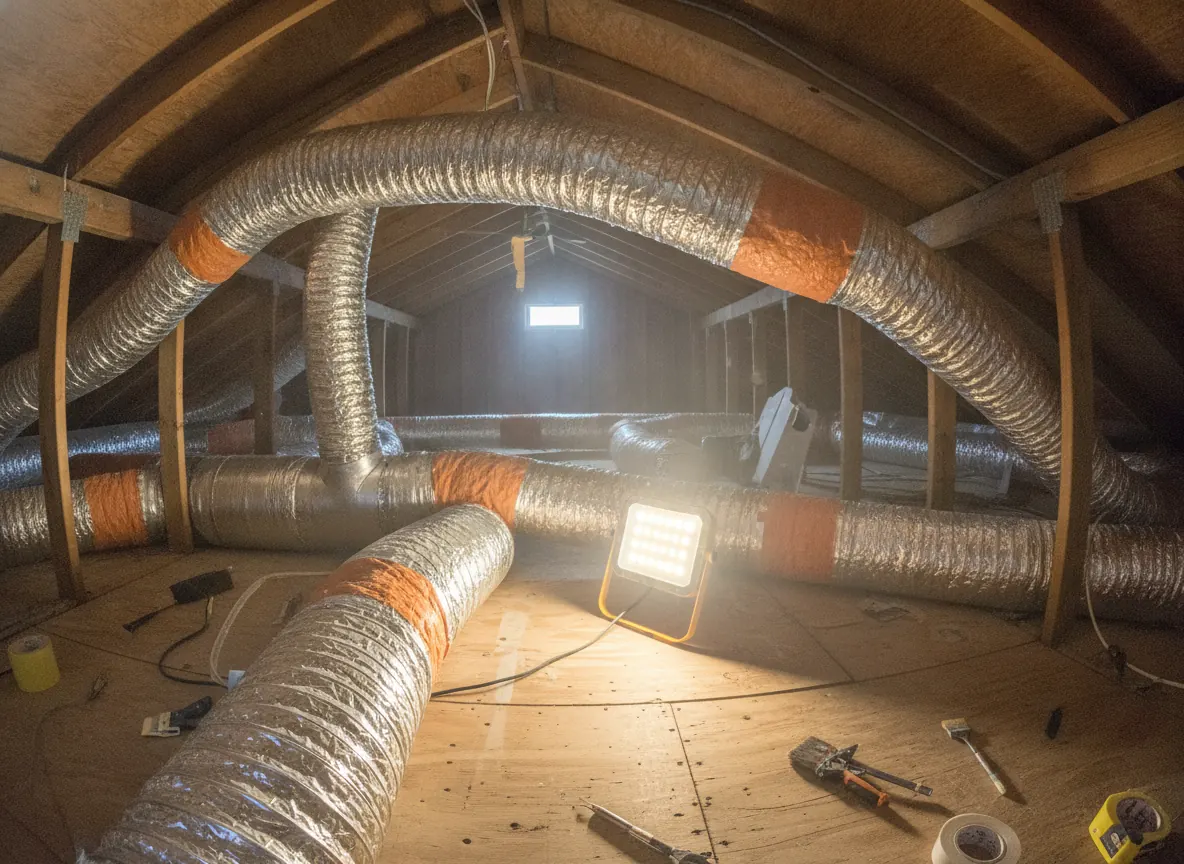
Leaky ducts are common in Central Florida homes
The Florida Solar Energy Center (FSEC), part of the University of Central Florida, has studied central Florida ductwork for decades:
- FSEC’s 1990 testing of homes five years old or less found that “significant leaks were found in the ductwork in a majority of homes tested,” with about 10.7% of the house’s leak area in the duct system.
- A 2002 FSEC study of 30 central Florida homes built the year before found duct leakage “higher than expected,” and the average installed air-handler cabinet let about 6% of system airflow leak in from the garage or attic. Leakage in an average 2,000 sq ft home can add 10–20% to annual heating and cooling costs.
- An FSEC duct repair study reported that return leaks fell from 16.7% to 4.5% after repair, and AC energy use fell 18.0% across 24 monitored homes.
Why attic ductwork matters
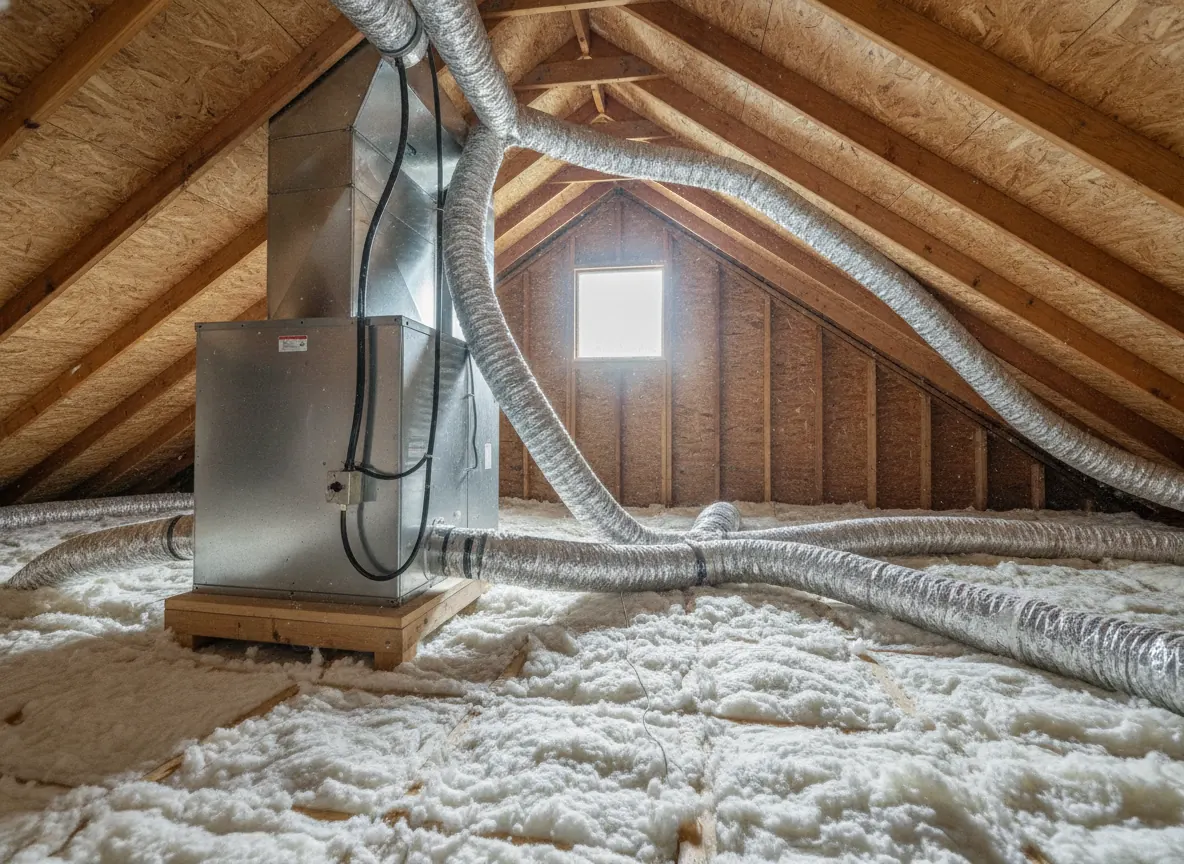
In many Florida homes, ductwork runs through hot attics. A Building America (NREL) study of Florida single-family homes — Jacksonville houses, not Orlando — estimated duct thermal losses of 10–45% where ductwork sits in unconditioned attics. Combine that with the FSEC findings on air-handler cabinets pulling in attic or garage air, and leaks become both an energy and a humidity problem in Orlando’s climate.
Moisture is the other half of the story. EPA says “the presence of condensation or high relative humidity is an important indicator of the potential for mold growth,” and that insulated ducts that get wet or moldy “cannot be effectively cleaned and should be removed and replaced.” If you’re seeing growth, start with mold in AC vents and ducts.
Sealing leaks vs. spraying sealant inside ducts: EPA’s caution
These sound alike but are very different. EPA explains: “Use of sealants to encapsulate the inside surfaces of ducts is a different practice than sealing duct air leaks. Sealing duct air leaks can help save energy on heating and cooling bills.”
On interior sealants (encapsulants), EPA is cautious:
- “Laboratory tests indicate that materials introduced in this manner tend not to completely coat the duct surface.”
- They “may also affect the acoustical (noise) and fire retarding characteristics of fiber glass lined or constructed ducts and may invalidate the manufacturer’s warranty.”
- NADCA, NAIMA and SMACNA “do not currently recommend the routine use of sealants to encapsulate contaminants in any type of duct.”
- “Sealants should never be used on wet duct liner, to cover actively growing mold, or to cover debris in the ducts.”
If a quote says “sealing,” ask whether it means sealing joints and seams from the outside or coating the inside of the ducts.
Florida law: duct repair is licensed, and may need a permit
The Class A and Class B air-conditioning contractor definitions in s. 489.105(3)(f)–(g), Florida Statutes, cover work to “install, maintain, repair, fabricate, alter, extend, or design” central air-conditioning systems, including duct work. Duct repair, sealing and attic ductwork replacement fall inside that scope. Replacements may need a building permit, and s. 489.127(1)(h) bars work without a required permit — ask each company how it handles permits.
In Florida, duct cleaning that involves removing grilles and AC coil work is licensed air-conditioning contractor work — ask for the company’s CAC/CMC license number and check it at MyFloridaLicense.com; a county business tax receipt is not a license. This is general information, not legal advice.
Utility rebates: OUC’s duct repair rebate
If you’re an OUC electric customer, OUC’s Duct Repair / Replacement Rebate pays “100% of the cost, up to $100” as a bill credit, for residential and business OUC electric customers (not water-only accounts). According to OUC, ducts must be sealed with mastic, or mastic with embedded UL-approved duct tape, “on all accessible boots, joints and seams of the Air Duct System”; ceiling penetrations need a draft stop seal; and receipts must be submitted within six months. The rebate is for repair and sealing — it does not cover duct cleaning. Duke Energy has also offered duct repair rebates; check each utility’s current terms before you rely on any amount.
What duct repair and sealing typically cost
Typical ranges from EPA, NADCA, HomeAdvisor (2026) and Fixr (2026) — estimates, not quotes.
| Item | Typical range |
|---|---|
| Duct repair | $200–$800 |
| Duct sealing and repairs | $500–$4,000 |
Ask each company what it will seal, with what material, and whether the work meets the OUC rebate requirements if you plan to apply. See the cost guide for related ranges, then request free quotes or call Call (727) 300-6656.
Frequently asked questions
Does sealing leaky ducts save energy?
EPA says “sealing duct air leaks can help save energy on heating and cooling bills.” Florida research backs that up: a 2002 Florida Solar Energy Center study reported that duct leakage in an average 2,000 sq ft home can add 10–20% to annual heating and cooling costs. Results vary by home, so ask for a written scope and estimate.
Is duct sealing the same as spraying a sealant inside the ducts?
No. EPA says encapsulating the inside surfaces of ducts “is a different practice than sealing duct air leaks.” NADCA, NAIMA and SMACNA do not currently recommend routine interior sealants, and EPA says lab tests show they “tend not to completely coat the duct surface” and may affect fire-retarding characteristics or void warranties. Leak sealing at joints and seams is the energy measure.
Does OUC offer a duct repair rebate?
OUC’s Duct Repair / Replacement Rebate pays 100% of the cost, up to $100, as a bill credit for residential and business OUC electric customers. Ducts must be sealed with mastic, or mastic with embedded UL-approved duct tape, on all accessible boots, joints and seams, and receipts are due within six months. It does not cover duct cleaning. Check OUC for current terms.
Do I need a licensed contractor or permit for duct replacement?
Florida’s Class A and Class B air-conditioning contractor scope, s. 489.105(3)(f)–(g), covers work to install, maintain and repair duct work, so duct repair and replacement are licensed work. Replacements may also need a permit, and s. 489.127(1)(h) bars work without a required permit. Ask for the CAC or CMC number and the permit plan. This is general information, not legal advice.
What does duct repair or sealing cost in Orlando?
National cost guides put duct repair at about $200–$800, and duct sealing and repairs at $500–$4,000 depending on how much ductwork needs work and how hard it is to reach. These are estimates, not quotes. An on-site look at the attic and air handler is the only way to get a real number, so compare written estimates.
Dusty vents or a musty AC smell? Compare quotes.
Free, no-pressure quotes across Orlando, Kissimmee, Winter Park, Sanford and Central Florida.