
Air Duct Cleaning in Orlando, FL
We connect Orlando-area homeowners with independent local air duct and HVAC companies for free, no-obligation quotes. We don’t do the work ourselves and aren’t a contractor.
Get a Free Quote Call (727) 300-6656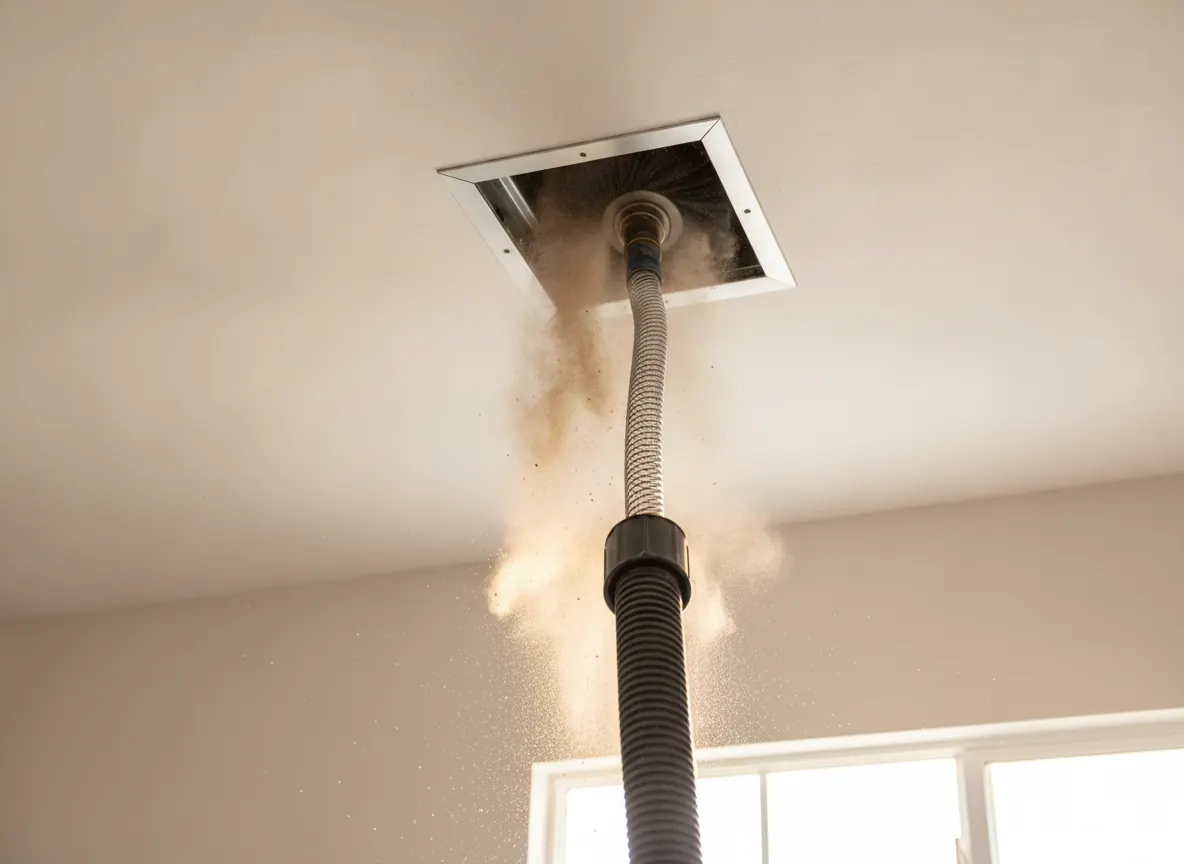
When is duct cleaning worth it? EPA’s three triggers
The U.S. Environmental Protection Agency’s guide Should You Have the Air Ducts in Your Home Cleaned? (last updated February 2026) does not recommend routine duct cleaning. It says to consider cleaning when:
- “There is substantial visible mold growth inside hard surface (e.g., sheet metal) ducts or on other components of your heating and cooling system.”
- “Ducts are infested with vermin, e.g. (rodents or insects).”
- “Ducts are clogged with excessive amounts of dust and debris and/or particles are actually released into the home from your supply registers.”
EPA is also blunt about health: “Duct cleaning has never been shown to actually prevent health problems.” If someone in your home has allergies, asthma or unexplained symptoms, talk to a doctor — don’t rely on a duct cleaner’s sales pitch.
Why Central Florida homes get a closer look
Orlando air conditioners rarely get a break. NOAA’s 1991–2020 normals for Orlando International Airport show about 3,452 cooling degree days a year against roughly 525 heating degree days, and summer dew points average above 70 °F from June through September. EPA notes that “the presence of condensation or high relative humidity is an important indicator of the potential for mold growth” in any type of duct.
Many Florida homes also use flexible or fiberglass duct board rather than bare sheet metal. Palm Beach County Consumer Affairs warns that “many homes in south Florida have insulated fiber or flex ducts which should not be cleaned aggressively. Doing so will loosen the fiberglass and send fibers through the house.” If moisture or mold is part of the story, see mold in AC vents and ducts before booking any cleaning.
What a thorough job looks like: NADCA source removal
The National Air Duct Cleaners Association (NADCA) describes “source removal” as the most effective method.
In NADCA’s words, source removal “requires a contractor to place the system under negative pressure, through the use of a specialized, powerful vacuum. While the vacuum draws air through the system, devices are inserted into the ducts to dislodge any debris that might be stuck to interior surfaces.” NADCA adds that any vacuum exhausting indoors must be HEPA filtered.
Inspection and proof
EPA says to ask providers to “show you the contamination that would justify having your ducts cleaned.”
Negative pressure
A powerful vacuum keeps the system under continuous negative pressure.
Agitation and collection
Brushes, whips or skipper balls loosen debris, which travels to the vacuum.
The whole system, not just vents
EPA’s scope includes supply and return ducts, registers, grilles, coils, condensate drain pans, the fan and the air handler housing. “Failure to clean a component of a contaminated system can result in re-contamination of the entire system.”
Sealing up and verification
Access holes should be sealed and re-insulated. NADCA: “If any dust or debris can be seen during the visual inspection, the system should not be considered cleaned.”
More on each step: how the process works.
Florida law: removing grilles makes it licensed work
Florida has no separate duct-cleaning license. Instead, the Class A and Class B air-conditioning contractor definitions in s. 489.105(3)(f)–(g), Florida Statutes, include “any duct cleaning and equipment sanitizing that requires at least a partial disassembling of the system.” A DBPR handout lists “Clean central air and heat ducts for compensation (requires partial disassembly of the system, such as removal of air grills)” as work that needs a license.
In Florida, duct cleaning that involves removing grilles and AC coil work is licensed air-conditioning contractor work — ask for the company’s CAC/CMC license number and check it at MyFloridaLicense.com; a county business tax receipt is not a license. This is general information, not legal advice.
More detail: Do you need a license to clean air ducts in Florida?
Sanitizers, fogging and antimicrobials: EPA’s cautions
This page doesn’t recommend sanitizers or fogging. Here is what EPA says:
- “Research has not demonstrated their effectiveness in duct cleaning or their potential adverse health effects.”
- “No chemical biocides are currently registered by EPA for use in internally-insulated air duct systems.”
- If you permit one, the provider should “show you the biocide label” and “apply the biocide only to un-insulated areas of the duct system after proper cleaning.” “It is a violation of federal law to use a pesticide product in any manner inconsistent with the label directions.”
NADCA says antimicrobials are “sometimes offered as an optional service” and are “only recommended when there is a specific need to address microbial contamination.” Spray-on sealants that coat the inside of ducts are a separate question: NADCA, NAIMA and SMACNA “do not currently recommend the routine use of sealants to encapsulate contaminants in any type of duct,” according to EPA.
What air duct cleaning typically costs
Typical ranges from EPA, NADCA, HomeAdvisor (2026) and Fixr (2026) — estimates, not quotes.
| Item | Typical range |
|---|---|
| Whole-system duct cleaning (EPA and NADCA) | $450–$1,000 per system |
| Cost-guide averages | about $389 (HomeAdvisor) to $500 (Fixr) |
| Per vent | $25–$50 |
| By home size (Fixr) | 1,500 sq ft $225–$525 · 2,000 sq ft $300–$700 · 3,000 sq ft $450–$1,050 |
| Dryer vent added to a duct cleaning | about $100 |
| Sanitizing (if not included) | $100–$250 |
NADCA’s advice is to “avoid advertisements for ‘$99 whole house specials’ and other sales gimmicks,” and to beware of “blow-and-go” companies. See the full air duct cleaning cost guide and our post on the $99 duct cleaning scam.
Questions to ask before you hire
- What is your CAC or CMC license number? (Then verify it yourself at MyFloridaLicense.com.)
- Can you show me the contamination that justifies cleaning?
- Will you clean the whole system — coils, drain pan, blower and air handler — or only the vents?
- Will you put the total cost and scope in a written agreement before work begins, as EPA recommends?
EPA suggests talking to at least three providers and getting written estimates. It also says to be wary of duct cleaners who claim to be certified by EPA, because “EPA neither establishes duct cleaning standards nor certifies, endorses, or approves duct cleaning companies.” Thinking about the dryer too? See dryer vent cleaning, or request free quotes.
Frequently asked questions
Is air duct cleaning worth it in Orlando?
Sometimes. EPA says to consider it when there is substantial visible mold in hard-surface ducts, vermin, or excessive dust and debris, and it does not recommend routine cleaning. EPA also says duct cleaning “has never been shown to actually prevent health problems.” Ask any company to show you the contamination, and talk to a doctor about health concerns.
How often should air ducts be cleaned in Florida?
NADCA doesn’t set a fixed schedule. It lists pets, allergies, smoking, water damage, remodeling and moving into a new home as reasons to clean more often. EPA says clean only as needed. Be cautious of anyone who says duct cleaning is a routine maintenance item; EPA lists that as a reason not to hire a duct cleaner.
Do you need a license to clean air ducts in Florida?
Usually, yes. Florida’s contractor law (s. 489.105(3)) puts “any duct cleaning and equipment sanitizing that requires at least a partial disassembling of the system” in air-conditioning contractor scope, and a DBPR handout gives removing air grills as the example. Ask for the CAC/CMC number and check it at MyFloridaLicense.com. This is general information, not legal advice.
Will duct cleaning get rid of mold?
Not on its own. EPA says that if the conditions causing mold growth are not corrected, “mold growth will recur,” and insulated ducts that get wet or moldy “cannot be effectively cleaned and should be removed and replaced.” In Orlando’s humidity, the moisture source usually needs attention first. Our mold page explains Florida’s rules.
Dusty vents or a musty AC smell? Compare quotes.
Free, no-pressure quotes across Orlando, Kissimmee, Winter Park, Sanford and Central Florida.