
Mold in AC Vents & Ducts in Orlando
We connect Orlando-area homeowners with independent local air duct and HVAC companies for free, no-obligation quotes. We don’t do the work ourselves and aren’t a contractor. Here’s what EPA and Florida law say about mold in AC systems.
Get a Free Quote Call (727) 300-6656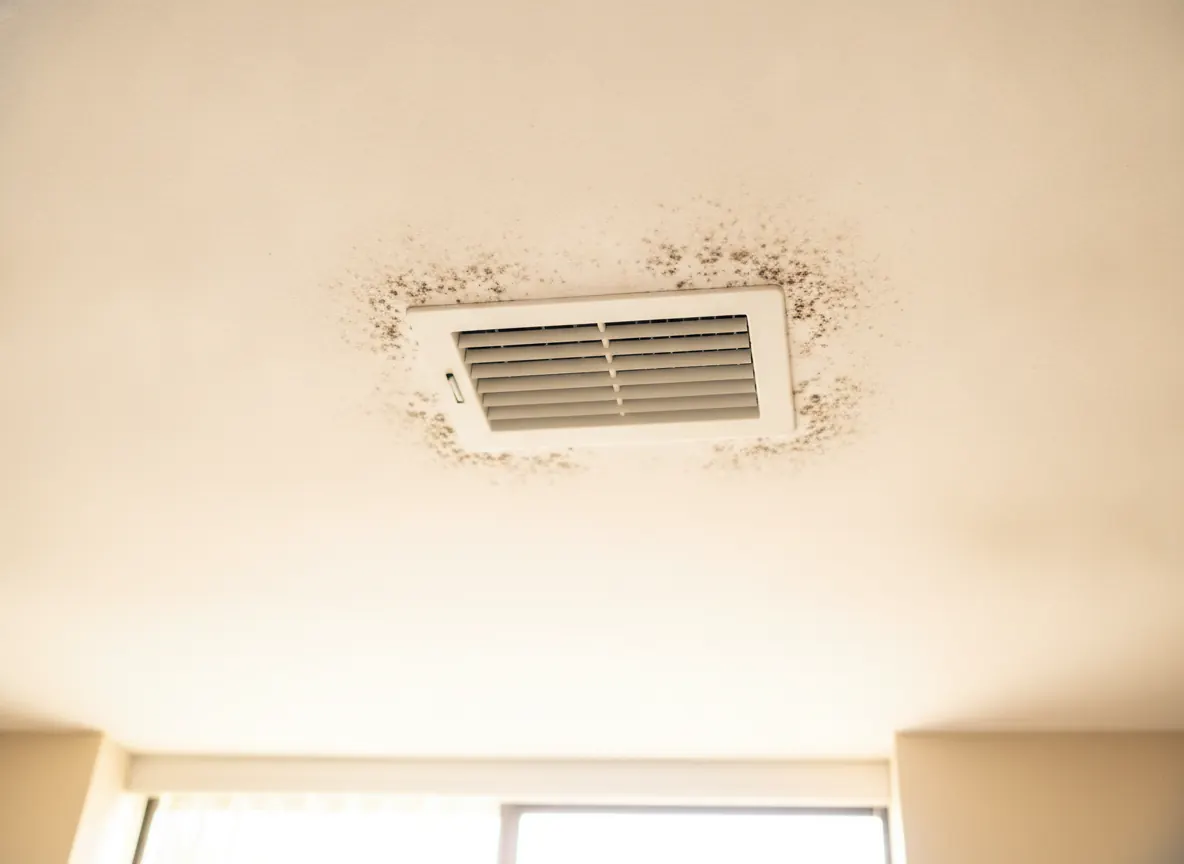
Why Orlando AC systems are prone to mold
Mold needs moisture, and Central Florida supplies plenty. NOAA’s 1991–2020 normals for Orlando show summer dew points averaging above 70 °F from June through September, and the rainy season runs from late May to mid-October. Inside the house, the AC coil is constantly pulling water out of that air.
EPA’s duct guide says “the presence of condensation or high relative humidity is an important indicator of the potential for mold growth” in any type of duct, and that an oversized air conditioner can cause “poor moisture removal, particularly in areas with high humidity.” Spots around a vent may come from condensation on the grille or ceiling, from growth inside the duct, or from the air handler itself. Each has a different fix.
What EPA says about mold in ducts
- When cleaning may make sense: “There is substantial visible mold growth inside hard surface (e.g., sheet metal) ducts or on other components of your heating and cooling system.”
- Ask for proof: ask the service provider “to show you any mold they say exists.”
- Insulated ducts: “If you have insulated air ducts and the insulation gets wet or moldy it cannot be effectively cleaned and should be removed and replaced.”
- Fix the cause: “If the conditions causing the mold growth in the first place are not corrected, mold growth will recur.”
- Humidity: “If possible, keep indoor humidity below 60 percent (ideally between 30 and 50 percent) relative humidity.”
Many Florida homes use flex duct or fiberglass duct board, so “mold in the ducts” often turns into a duct replacement question — see duct repair and sealing. For the air handler, coil and drain pan, see AC coil and air handler cleaning. Health concerns are a question for your doctor; EPA says duct cleaning “has never been shown to actually prevent health problems.”
Florida mold law and AC systems
Florida regulates mold work in Part XVI of chapter 468, Florida Statutes. Three pieces matter for AC vents and ducts:
- The 10 sq ft line. s. 468.8411(5) defines “mold remediation” as removal, cleaning, sanitizing, demolition or other treatment of mold or mold-contaminated matter “of greater than 10 square feet.” Smaller areas fall outside that definition.
- Mold remediators can’t open the AC system on that license alone. s. 468.8411(6): “A mold remediator may not perform any work that requires a license under chapter 489 unless the mold remediator is also licensed under that chapter or complies with that chapter.”
- The AC contractor exemption. s. 468.841(2)(d) exempts businesses “acting within the scope of the respective licenses required under… chapter 489” — which includes air-conditioning contractors — “except when any such persons or business organizations hold themselves out for hire to the public as a ‘certified mold remediator,’ ‘registered mold remediator,’ ‘licensed mold remediator,’ ‘mold remediator,’” or similar.
Put together: an air-conditioning contractor working within its AC scope is generally exempt from the mold license if it doesn’t advertise itself as a mold remediator, while someone with neither license shouldn’t be treating mold in your AC system. Whether “within the scope” covers every kind of mold treatment inside ducts is an interpretation, not a settled ruling.
In Florida, duct cleaning that involves removing grilles and AC coil work is licensed air-conditioning contractor work — ask for the company’s CAC/CMC license number and check it at MyFloridaLicense.com; a county business tax receipt is not a license. This is general information, not legal advice.
After a flood or hurricane: the Florida Department of Health warning
Central Florida has seen major flooding in recent storms. During Hurricane Ian in 2022, Orlando International Airport recorded 13.2 inches of rain and Orlando Sanford recorded 16.1 inches, according to National Hurricane Center data. If water reached your air handler or ductwork, the Florida Department of Health is direct: “If the system was flooded, turning it on without proper cleaning will spread mold throughout your home.” It advises: “Have your home heating/air-conditioning system cleaned by a professional, experienced in mold clean-up.”
Sanitizers and coatings: EPA’s cautions
Sprays and fogs are often pitched for mold. EPA says research “has not demonstrated their effectiveness in duct cleaning or their potential adverse health effects,” that “no chemical biocides are currently registered by EPA for use in internally-insulated air duct systems,” and that treatments “should only be applied, if at all, after the system has been properly cleaned of all visible dust or debris.” On interior coatings: “Sealants should never be used on wet duct liner, to cover actively growing mold, or to cover debris in the ducts.” This page doesn’t recommend any product.
What mold work in an HVAC system typically costs
Typical ranges from EPA, NADCA, HomeAdvisor (2026) and Fixr (2026) — estimates, not quotes.
| Item | Typical range |
|---|---|
| HVAC mold work added to a cleaning | $1,000–$5,000 |
| Whole-system HVAC mold work | $3,000–$10,000 |
| Whole-system duct cleaning (EPA and NADCA) | $450–$1,000 per system |
Before you agree to anything, ask the company to show you the mold, explain what is causing the moisture, and put the scope and total cost in writing. Read more in our post on mold in AC vents in Florida or why an AC smells musty, then request free quotes or call Call (727) 300-6656.
Frequently asked questions
Will air duct cleaning get rid of mold in my vents?
Not by itself. EPA says that if the conditions causing mold growth “are not corrected, mold growth will recur,” and that wet or moldy insulated ducts “cannot be effectively cleaned and should be removed and replaced.” In Orlando homes with flex or duct-board ducts, that often means fixing the moisture source and replacing components, which is air-conditioning contractor work in Florida.
Who can legally deal with mold in AC ducts in Florida?
Under Florida law, a mold remediator who isn’t also licensed under chapter 489 may not do work that requires a contractor license, such as opening the AC system. An air-conditioning contractor acting within its license scope is exempt from the mold license, as long as it doesn’t hold itself out as a “mold remediator.” This is general information, not legal advice.
What is Florida's 10 square foot mold rule?
Florida’s mold law, s. 468.8411(5), defines “mold remediation” as the removal, cleaning, sanitizing, demolition or other treatment of mold or mold-contaminated matter “of greater than 10 square feet.” Areas of 10 square feet or less fall outside that definition. Larger areas trigger the mold-remediator licensing rules, subject to the exemptions in s. 468.841. This is general information, not legal advice.
Should I turn my AC back on after flooding?
Not until it has been checked. The Florida Department of Health warns: “If the system was flooded, turning it on without proper cleaning will spread mold throughout your home.” It advises having the heating and air-conditioning system cleaned by a professional experienced in mold clean-up. Ask any company for its CAC or CMC license number and verify it at MyFloridaLicense.com.
Why does mold keep coming back around my AC vents?
EPA says “the presence of condensation or high relative humidity is an important indicator of the potential for mold growth,” and that growth will recur if the cause isn’t corrected. EPA suggests keeping indoor humidity below 60 percent and keeping drip pans clean and drain lines flowing. An air-conditioning contractor can look at sizing, drainage and leaks that let humid air in.
Dusty vents or a musty AC smell? Compare quotes.
Free, no-pressure quotes across Orlando, Kissimmee, Winter Park, Sanford and Central Florida.