
AC Condensate Drain Line Help in Orlando
We connect Orlando-area homeowners with independent local HVAC companies for free, no-obligation quotes on clogged or slow AC condensate drain lines. We don’t do the work ourselves and aren’t a contractor.
Get a Free Quote Call (727) 300-6656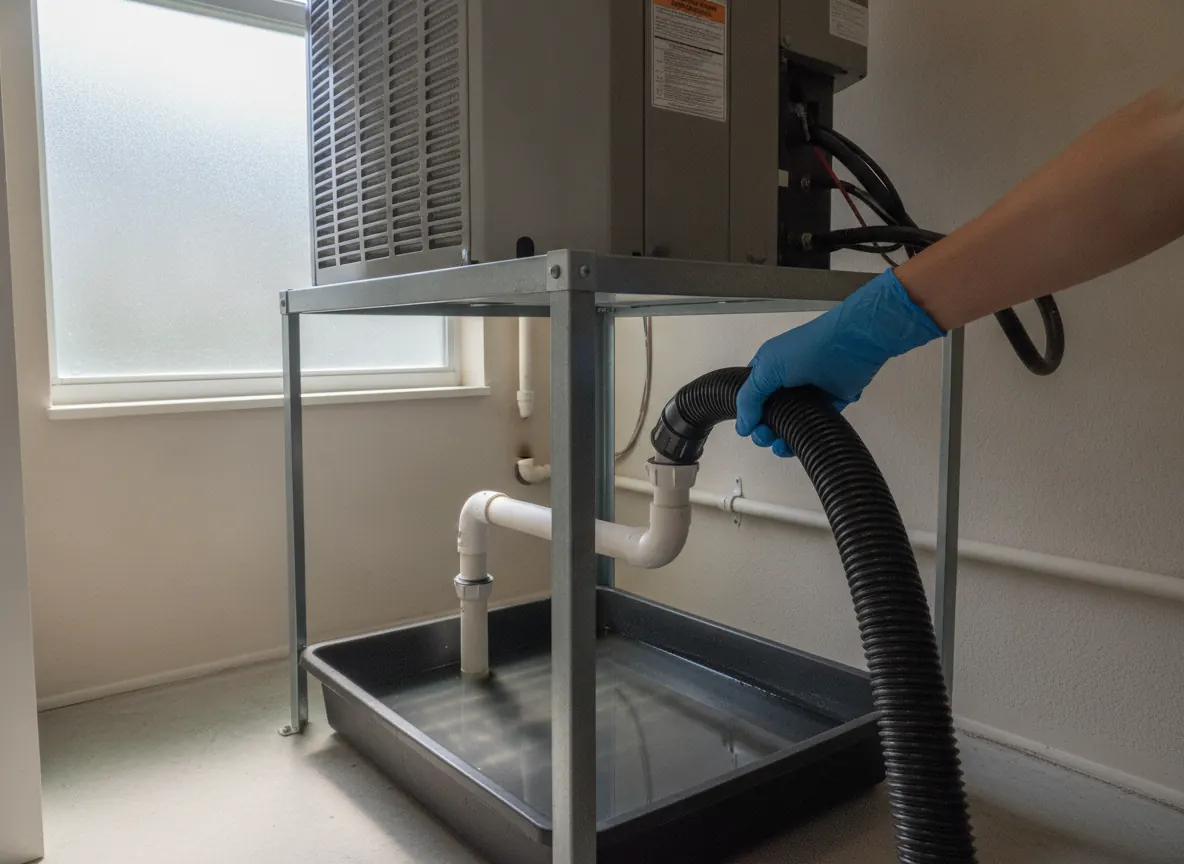
What the condensate drain line does
As warm, humid air passes over your AC’s evaporator coil, moisture condenses on the coil and drips into a drain pan. The condensate drain line carries that water out of the house. When the line slows or clogs, water has nowhere to go — and in an attic or closet air handler, that can mean water where it shouldn’t be.
Central Florida keeps that system busy. NOAA’s 1991–2020 normals for Orlando International Airport show about 3,452 cooling degree days a year, with cooling demand in every month, and summer dew points averaging above 70 °F from June through September. The rainy season runs from late May to mid-October. More humid air across the coil means more water through the drain.
EPA’s guidance: keep drain lines flowing
EPA’s Brief Guide to Mold, Moisture and Your Home (updated February 2026) puts it plainly:
- “Keep air conditioning drip pans clean and the drain lines unobstructed and flowing properly.”
- “If possible, keep indoor humidity below 60 percent (ideally between 30 and 50 percent) relative humidity.”
- “Condensation can be a sign of high humidity.”
EPA’s duct guide adds that “the presence of condensation or high relative humidity is an important indicator of the potential for mold growth,” and lists condensate drain pans among the components a thorough HVAC cleaning should cover. It also notes that an oversized air conditioner can cause “poor moisture removal, particularly in areas with high humidity” — something worth raising if your home feels damp even with the AC running.
Signs worth a call to an air-conditioning contractor
You don’t need to diagnose the problem yourself. When you request quotes, it helps to describe what you’ve noticed, such as:
- Standing water in or around the drain pan at the indoor unit
- Water stains on a ceiling below an attic air handler
- A musty smell near the indoor unit or from the vents
- Condensation on vents, grilles or ceilings near them
- A drain line that has backed up before
A company will typically check the drain pan, the line and where it discharges, then explain what it found and what it recommends. Ask to see the problem, and ask for the scope and total cost in writing before work begins. If the air handler, coil or pan also needs attention, see AC coil and air handler cleaning; if there’s visible growth, see mold in AC vents and ducts.
Florida law: drain line work is air-conditioning contractor work
Florida’s Class A and Class B air-conditioning contractor definitions, s. 489.105(3)(f) and (g), Florida Statutes, expressly include the authority “to install a condensate drain from an air-conditioning unit to an existing safe waste or other approved disposal other than a direct connection to a sanitary system,” along with maintaining and repairing central air-conditioning systems. Simply flushing or vacuuming an existing line isn’t named in the statute, and whether that needs a license is unresolved — so the safe course is to treat drain line work as licensed AC work and hire accordingly.
In Florida, duct cleaning that involves removing grilles and AC coil work is licensed air-conditioning contractor work — ask for the company’s CAC/CMC license number and check it at MyFloridaLicense.com; a county business tax receipt is not a license. This is general information, not legal advice.
What it costs
No authoritative published price for AC drain line clearing was found, so this site doesn’t list one. Price depends on where the air handler sits (attic, closet or garage), what is causing the blockage, and whether the drain pan or other components need work. Compare written estimates from more than one company. For related ranges such as duct cleaning and AC cleaning, see the cost guide.
Questions to ask before you book
- What is your CAC or CMC license number? (Verify it at MyFloridaLicense.com.)
- What do you think is causing the clog, and can you show me?
- Will you check the drain pan and where the line discharges, too?
- What is the total cost, and will you put the scope in writing?
Wondering about smells? Read why an AC smells musty. When you’re ready, request free quotes or call Call (727) 300-6656. We usually reply the same day.
Frequently asked questions
Why does my AC drain line keep clogging?
In Central Florida the condensate system works almost every month. NOAA normals show cooling demand in Orlando even in January, and summer dew points average above 70 °F, so the coil produces a lot of water. EPA advises keeping drip pans clean and drain lines “unobstructed and flowing properly.” An air-conditioning contractor can look for the reason a line keeps backing up.
Is clearing an AC drain line licensed work in Florida?
Treat it as air-conditioning contractor work. Florida’s Class A and Class B scope in s. 489.105(3)(f)–(g) expressly includes installing a condensate drain from an AC unit, and opening the air handler is maintenance of the system. Whether simply flushing an existing line needs a license isn’t settled. Ask for a CAC or CMC number. This is general information, not legal advice.
How much does it cost to unclog an AC drain line?
No authoritative published price for drain line clearing was found, so this site doesn’t list one. The cost depends on where the air handler sits, what is causing the blockage and whether the drain pan or other parts need attention. Ask each company for a written estimate before work begins, and ask what is included.
What does EPA recommend for AC drain pans and lines?
EPA’s mold and moisture guide says to “keep air conditioning drip pans clean and the drain lines unobstructed and flowing properly.” It also recommends keeping indoor humidity below 60 percent, ideally between 30 and 50 percent, and notes that condensation can be a sign of high humidity. Those steps help limit the moisture mold needs to grow.
Can a clogged AC drain line lead to mold?
It can contribute. EPA says “the presence of condensation or high relative humidity is an important indicator of the potential for mold growth,” and that mold growth will recur if the conditions causing it aren’t corrected. Standing water in a drain pan is moisture that shouldn’t be there. If you’re already seeing growth, read our page on mold in AC vents and ducts.
Dusty vents or a musty AC smell? Compare quotes.
Free, no-pressure quotes across Orlando, Kissimmee, Winter Park, Sanford and Central Florida.