
Search "do you need a license to clean air ducts" and the answers are vague. In Florida the answer is specific. State law treats most real-world duct cleaning, the kind where someone takes the grilles off and works inside the system, as air-conditioning contractor work. This guide walks through what the statute says, how the state's licensing agency explains it, and how to check a company's CAC or CMC number on MyFloridaLicense.com before anyone opens your system.
This is general information, not legal advice. It summarizes Florida statutes and agency materials as they read in October 2026. For a question about your own situation, talk to a Florida attorney or contact the Florida Department of Business and Professional Regulation (DBPR).
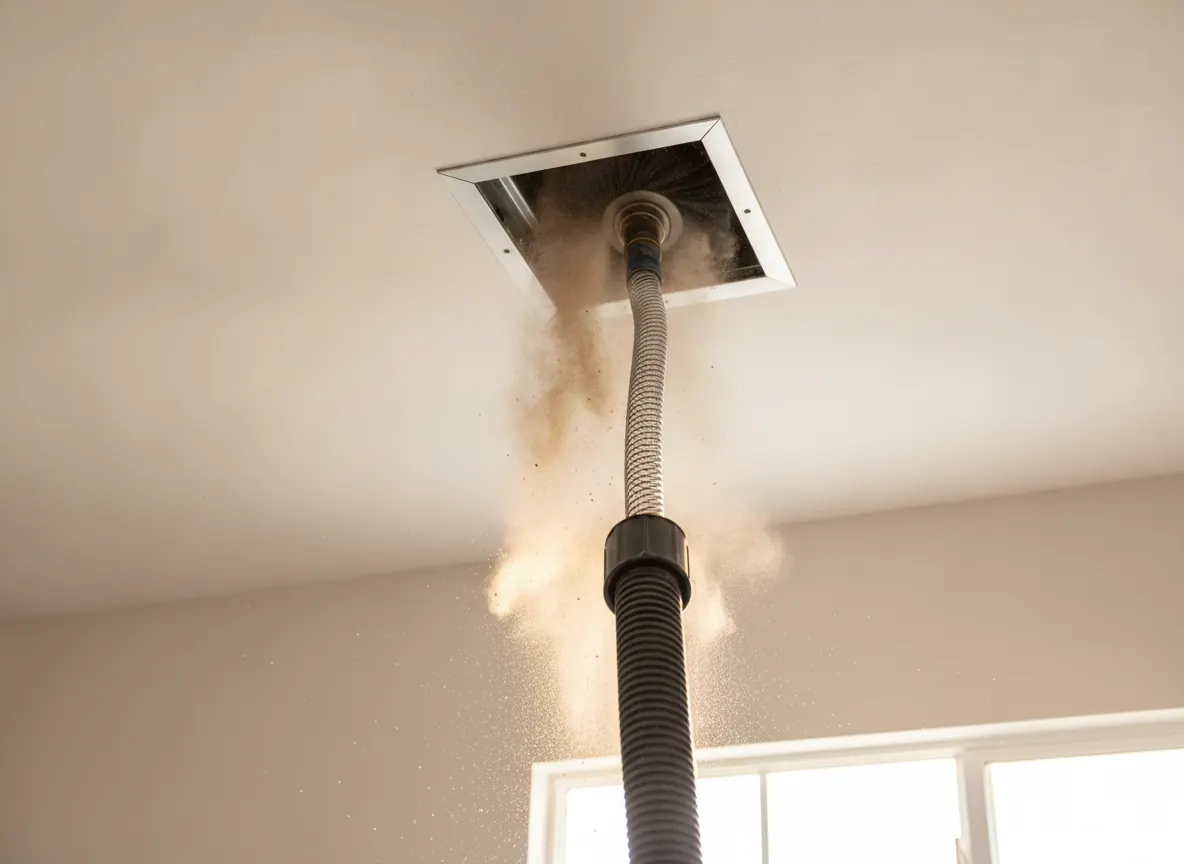
The short answer: usually yes, if the grilles come off
Florida does not have a separate "duct cleaning license." Instead, duct cleaning is written into the definitions of several contractor categories in section 489.105 of the Florida Statutes. The phrase that matters appears in each of them: the contractor's scope includes "any duct cleaning and equipment sanitizing that requires at least a partial disassembling of the system."
Taking off a supply or return grille is a partial disassembly. So is opening the air handler cabinet to reach the blower, coil or drain pan. That means a typical whole-house duct cleaning, which almost always involves removing grilles and opening access points, falls inside licensed contractor work in Florida.
What F.S. 489.105 actually says
The "partial disassembling" language shows up in these license categories, according to the 2026 Florida Statutes:
- Class A air-conditioning contractor, s. 489.105(3)(f): unlimited scope to "install, maintain, repair, fabricate, alter, extend, or design" central air-conditioning, heating and ventilating systems, including duct work, "and any duct cleaning and equipment sanitizing that requires at least a partial disassembling of the system."
- Class B air-conditioning contractor, s. 489.105(3)(g): the same scope, limited to 25 tons of cooling and 500,000 Btu of heating in any one system. That limit covers essentially every single-family home.
- Class C air-conditioning contractor, s. 489.105(3)(h): a servicing-only category that includes the same duct cleaning language, but it has been closed to new applicants since October 1, 1988.
- Mechanical contractor, s. 489.105(3)(i), and sheet metal contractor, s. 489.105(3)(d): both include the same duct cleaning and equipment sanitizing wording.
The Class A and B definitions also cover installing "a condensate drain from an air-conditioning unit," which is why AC drain line work generally sits with AC contractors too. They also say an AC contractor "may test and evaluate" systems, including duct work, but that "a mandatory licensing requirement is not established for the performance of these specific services."
DBPR's example: "removal of air grills"
DBPR's Construction Industry Licensing Board publishes a handout titled "What services require a State of Florida license?" (reproduced by Columbia County, Florida). It gives a direct duct cleaning example:
- Needs a license: "Clean central air and heat ducts for compensation (requires partial disassembly of the system, such as removal of air grills)."
- Does not need a license: "Change an A/C filter or cleaning ducts that do not require removal of the air grills regardless of compensation."
Palm Beach County Consumer Affairs puts it even more bluntly in its tip sheet "Is Duct Cleaning the Solution?": "A license is required for contractors who provide duct cleaning services." The U.S. EPA's long-standing list of states that require duct cleaners to hold special licenses has also included Florida since 1996.
What about coil cleaning, mold and dryer vents?
AC coil and air handler cleaning. Opening the air handler to clean the evaporator coil, blower or drain pan is equipment sanitizing that requires partial disassembly, and it is also maintenance of a central AC system. Both point to Class A, Class B or mechanical contractor work. See our AC coil and air handler cleaning guide for what that work usually involves.
Duct repair, sealing and replacement. Repairing or replacing duct work is named directly in the AC contractor definitions, and a replacement may also need a permit. More on that in our duct repair and sealing page.
Mold in ducts. Florida's mold law, s. 468.8411, defines mold remediation as treatment of mold "of greater than 10 square feet," and says that work may not include work requiring a chapter 489 license unless the person holds that license. Under s. 468.841(2)(d), a licensed AC contractor working within the scope of its license is exempt from the mold license, as long as it does not hold itself out as a "mold remediator." So a mold remediator without an AC license should not be opening your air handler, and an unlicensed duct cleaner has neither license. Read more in Mold in AC vents in Florida.
Dryer vent cleaning. This is the exception. In Declaratory Statement 2014-125 (filed January 30, 2015), the Construction Industry Licensing Board said that "because there is no disassembly of the dryer exhaust system in order to clean the dryer vent using the method described, a mechanical contractor's license is not necessary." That statement applied to that petitioner's method. Rerouting or replacing a vent is a different job. See dryer vent cleaning in Orlando.
Why the handyman exemption doesn't cover duct cleaners who advertise
Florida has an exemption in s. 489.103(9) for "casual, minor, or inconsequential" work under $2,500. But the statute says the exemption does not apply "to a person who advertises that he or she is a contractor or otherwise represents that he or she is qualified to engage in contracting." Section 489.127(1)(f) also makes it unlawful to advertise as available to do contractor work without being registered or certified.
A business tax receipt is not a license
Many companies display a county or city business tax receipt, sometimes called an occupational license. It proves the business registered locally and paid a tax. It does not prove anyone is qualified to work on your AC system. Section 489.127(1) says it plainly: "A business tax receipt issued under the authority of chapter 205 is not a license for purposes of this part." If the only paperwork a company can show you is a tax receipt, keep asking.
Also be wary of anyone who says they are "EPA certified" to clean ducts. The EPA states that it "neither establishes duct cleaning standards nor certifies, endorses, or approves duct cleaning companies."
CAC and CMC numbers: what the letters mean
Florida contractor license numbers start with letters that tell you the type. Per DBPR's coding, certified licenses begin with "C" and registered licenses begin with "R." For air duct work, the common ones are:
- CAC: Certified Air-Conditioning Contractor (Class A or B). Valid statewide.
- CMC: Certified Mechanical Contractor. Also covers duct cleaning that requires partial disassembly.
- Registered (R) licenses: issued on the basis of a local competency. DBPR notes that "Registered contractors may contract only in such jurisdictions," so the registration needs to cover Orange, Seminole, Osceola or whichever county you live in.
Under s. 489.119(5)(b), a contractor's registration or certification number "shall appear in each offer of services, business proposal, bid, contract, or advertisement, regardless of medium." If a duct cleaning ad, website or estimate has no license number on it, that is worth asking about.
How to check a license on MyFloridaLicense.com
Get the number in writing
Ask the company for its CAC, CMC or other license number and the exact business name, and make sure both appear on the written estimate.
Search the state database
Go to MyFloridaLicense.com, choose "Verify a License," and search by license number or by name. DBPR says users "can verify licenses by name or license number."
Confirm the status
The license should show as current and active, not delinquent, expired or inactive.
Confirm the license type
Look for Certified or Registered Air Conditioning Contractor (Class A or B), Mechanical, or Sheet Metal.
Match the name
The licensee or business name should match the company on your estimate.
Check the area for registered licenses
If the number starts with "R," confirm the registration covers your county.
Questions to ask before anyone removes a grille
- What is your Florida license number, and whose name is it under?
- Which parts of the system are included: supply and return ducts, registers, air handler, blower, coil, drain pan?
- Will you show me the dust, debris or mold that justifies the cleaning? The EPA suggests asking providers to "show you the contamination."
- Can I get the total price and scope in writing before work starts?
Pricing questions? Our air duct cleaning cost guide lists typical ranges from EPA, NADCA and national cost guides, and our $99 duct cleaning scam guide covers the offers that should make you pause.
How Orlando Air Duct Pros fits in
We connect Orlando-area homeowners with independent local air duct and HVAC companies for free, no-obligation quotes. We don't do the work ourselves and aren't a contractor. Whichever company you talk to, ask for its CAC or CMC license number and check it at MyFloridaLicense.com before you sign anything. When you're ready, request a free quote and compare.
This is general information, not legal advice.