
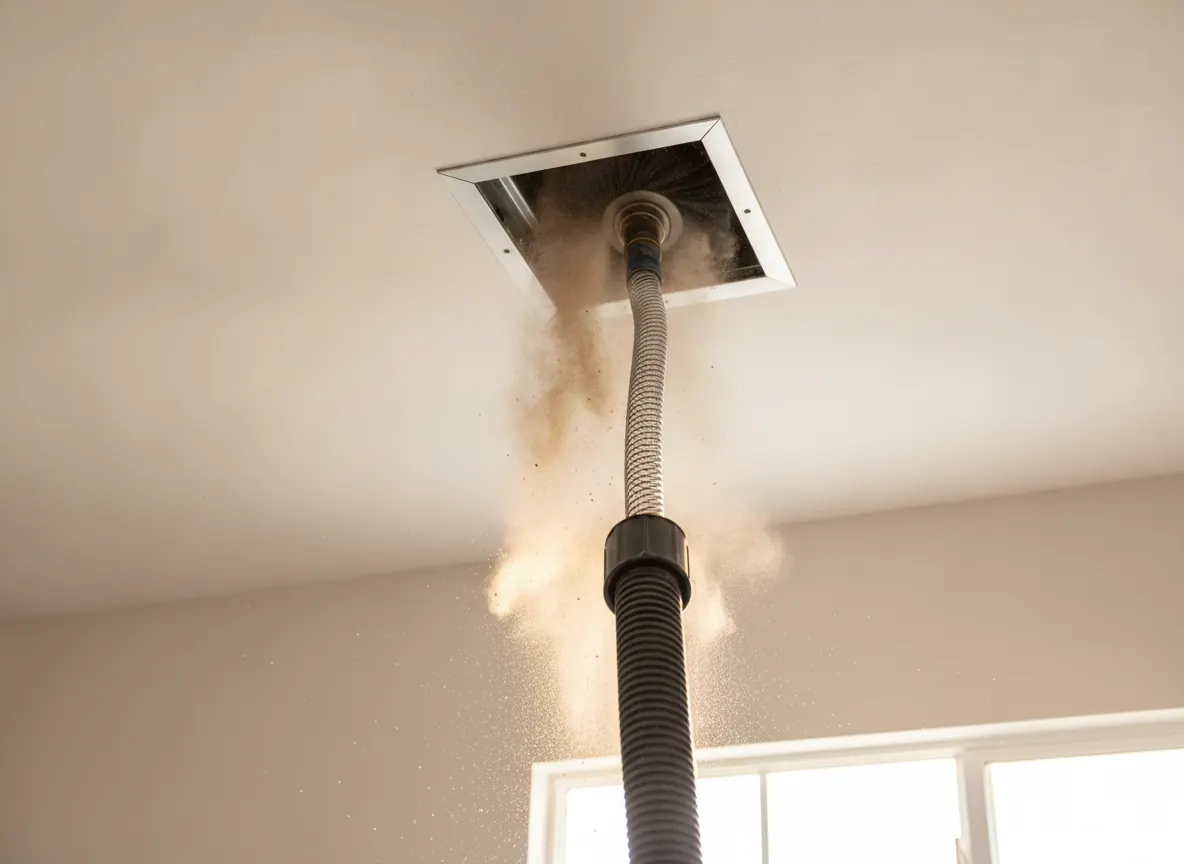
If you live in Orlando, your air conditioner probably runs almost every day of the year, and sooner or later someone will tell you your ducts need cleaning. Sometimes that advice is right. Often it isn't. This guide walks through what the U.S. Environmental Protection Agency (EPA) actually says, how Central Florida's heat and humidity change the picture, and how to tell a useful cleaning from an expensive one you didn't need.
The short answer: worth it in specific situations, not as routine maintenance
The EPA's consumer guide, Should You Have the Air Ducts in Your Home Cleaned? (last updated February 19, 2026), is direct: "EPA does not recommend that air ducts be cleaned except on an as-needed basis because of the continuing uncertainty about the benefits of duct cleaning under most circumstances." So the honest answer to "is air duct cleaning worth it?" is that it depends on what is actually inside your system. If there is a real problem, professional duct cleaning can make sense. If there isn't, you may be paying for very little.
What the EPA says about health and efficiency
Many duct cleaning ads lean on health claims. The EPA does not back them up: "Duct cleaning has never been shown to actually prevent health problems. Neither do studies conclusively demonstrate that particle (e.g., dust) levels in homes increase because of dirty air ducts or go down after cleaning." It adds that "there is no evidence that a light amount of household dust or other particulate matter in air ducts poses any risk to health."
If anyone in your home has allergies, asthma or other health concerns, talk to a doctor. Duct cleaning is not a medical treatment, and nobody should sell it to you as one.
On energy use, the EPA draws a useful distinction: "Some research also suggests that cleaning dirty cooling coils, fans and heat exchangers can improve the efficiency" of a system, but "little evidence exists to indicate that simply cleaning the duct system will increase your system's efficiency." In other words, the coil and blower inside the air handler matter more for efficiency than the duct runs do. That's why AC coil and air handler cleaning is often a separate conversation from duct cleaning.
Three situations where cleaning is worth considering
The EPA lists three situations where you should consider having your ducts cleaned:
- Visible mold. "There is substantial visible mold growth inside hard surface (e.g., sheet metal) ducts or on other components of your heating and cooling system."
- Vermin. "Ducts are infested with vermin, e.g. (rodents or insects)."
- Heavy debris. "Ducts are clogged with excessive amounts of dust and debris and/or particles are actually released into the home from your supply registers."
Notice what's missing from that list: "it's been a few years" and "you just want fresher air." If none of the three applies, the EPA's guidance points toward waiting.
Why Florida humidity changes the conversation
Central Florida systems work harder than most. NOAA's 1991–2020 climate normals for Orlando International Airport show about 3,452 cooling degree days a year against roughly 525 heating degree days, and an average of about 110 days a year at 90°F or hotter. Even January logs cooling demand, so the AC runs in every month. Summer dew points average above 70°F from June through September, and the rainy season typically runs from late May to mid-October.
That moisture matters more than dust. The EPA notes that "the presence of condensation or high relative humidity is an important indicator of the potential for mold growth" in any type of duct, and that an oversized air conditioner can cause "poor moisture removal, particularly in areas with high humidity." Its mold guide recommends keeping indoor humidity "below 60 percent (ideally between 30 and 50 percent)" and keeping "air conditioning drip pans clean and the drain lines unobstructed and flowing properly."
Two more Florida-specific points:
- Flex and duct-board ducts need a gentle hand. Palm Beach County Consumer Affairs warns that "many homes in south Florida have insulated fiber or flex ducts which should not be cleaned aggressively. Doing so will loosen the fiberglass and send fibers through the house." The same holds for the flex duct common in Central Florida attics.
- Wet or moldy insulated duct usually can't be cleaned. The EPA says, "If you have insulated air ducts and the insulation gets wet or moldy it cannot be effectively cleaned and should be removed and replaced." In that case the real job is duct repair or replacement, not cleaning. Our mold in AC vents and ducts page explains more.
So in Florida, the useful question is less "are my ducts dusty?" and more "is moisture getting where it shouldn't?" A clogged condensate drain line, a wet drain pan or a sweating duct in the attic is a cause. Cleaning without fixing the cause just resets the clock. In the EPA's words, "If the conditions causing the mold growth in the first place are not corrected, mold growth will recur."
When duct cleaning is probably not worth the money
The EPA puts it plainly: "If no one in your household suffers from allergies or unexplained symptoms or illnesses and if, after a visual inspection of the inside of the ducts, you see no indication that your air ducts are contaminated with large deposits of dust or mold (no musty odor or visible mold growth), having your air ducts cleaned is probably unnecessary." It also notes that "it is normal for the return registers to get dusty." A gray film on the return grille is not, by itself, a reason to clean the whole system.
A poor cleaning can also make things worse. The EPA warns that "an inadequate vacuum collection system can release more dust, dirt and other contaminants than if you had left the ducts alone."
Is air duct cleaning a ripoff?
Not inherently, but the industry has a scam problem. The National Air Duct Cleaners Association (NADCA) tells consumers to "avoid advertisements for '$99 whole house specials' and other sales gimmicks" and to "beware of 'blow-and-go' air duct cleaning companies." The EPA adds its own red flags:
- Don't hire duct cleaners "who make sweeping claims about the health benefits of duct cleaning — such claims are unsubstantiated."
- Don't hire duct cleaners "who recommend duct cleaning as a routine part of your heating and cooling system maintenance."
- "Be wary of duct cleaners who claim to be certified by EPA." The EPA "neither establishes duct cleaning standards nor certifies, endorses, or approves duct cleaning companies."
We cover the bait-and-switch pattern in detail in The $99 Duct Cleaning Scam.
What a real cleaning typically costs
These are typical ranges from EPA, NADCA, HomeAdvisor (2026) and Fixr (2026). They are estimates, not quotes.
| Item | Typical range |
|---|---|
| Whole-system duct cleaning (EPA and NADCA) | $450–$1,000 per system |
| Cost-guide averages | about $389 (HomeAdvisor) to $500 (Fixr) |
| Per vent | $25–$50 |
| Dryer vent cleaning | $100–$170 alone; about $100 added to a duct cleaning |
| Sanitizing (if not included) | $100–$250 |
See the full Orlando air duct cleaning cost guide for home-size ranges and the factors that move a quote up or down. On sanitizers: the EPA says biocide research "has not demonstrated their effectiveness in duct cleaning or their potential adverse health effects," and that "no chemical biocides are currently registered by EPA for use in internally-insulated air duct systems." If one is offered, ask to see the label first.
Check the license before anyone removes a grille
In Florida, duct cleaning that involves removing grilles and AC coil work is licensed air-conditioning contractor work. Ask for the company's CAC/CMC license number and check it at MyFloridaLicense.com. A county business tax receipt is not a license. Florida Statutes s. 489.105(3) includes "any duct cleaning and equipment sanitizing that requires at least a partial disassembling of the system" in the air-conditioning contractor scope, and a DBPR handout gives "removal of air grills" as the example. Our post on Florida duct cleaning licenses walks through the lookup. This is general information, not legal advice.
A simple way to decide
Look first
Shine a flashlight through a supply register. Note any musty odor, visible growth, pest signs or dust blowing out of the vents.
Ask to see it
The EPA says to ask providers "to show you the contamination that would justify having your ducts cleaned," and to "show you any mold they say exists."
Compare written estimates
The EPA suggests talking to "at least three different service providers" and getting "a written agreement outlining the total cost and scope of the job before work begins."
Fix the moisture source
Ask how the company will deal with the cause, whether that's a drain line, a drain pan, duct leaks or humidity, not just the symptom.
Still not sure how often a Florida system needs attention? Read How Often Should Air Ducts Be Cleaned in Florida?
How Orlando Air Duct Pros works: We connect Orlando-area homeowners with independent local air duct and HVAC companies for free, no-obligation quotes. We don't do the work ourselves and aren't a contractor. If you'd like a company to look at your system and explain what it finds, request a free quote and we usually reply the same day.